Estate Planning for New Florida Residents: Guide
Moving to Florida is exciting—sunshine, new opportunities, and often a fresh start. But once the boxes are unpacked, many new residents overlook a critical to-do: updating their estate plan for Florida law. Wills, trusts, beneficiary designations, and healthcare documents that worked well in another state can create confusion, delays, or unintended outcomes here. Florida’s rules around homestead property, probate, and powers of attorney are especially unique, and they can materially change what happens to your home, your assets, and your medical decisions if you become incapacitated.
This guide explains what new Florida residents should know about estate planning, what to update first, and how to avoid common mistakes. Whether you moved for retirement, work, family, or a lifestyle change, the goal is the same: make sure your plan reflects your new home state, your current wishes, and the realities of Florida law.
1) Why Florida estate planning is different (and why it matters)
Many people assume estate planning is “portable”—that a will or trust signed in another state will function the same way in Florida. While Florida may recognize documents properly executed elsewhere, recognition is not the same as effectiveness. Florida has its own statutes, court procedures, and property rules that can change how assets transfer, how quickly heirs receive them, and whether disputes arise.
One major difference is Florida’s probate environment. Florida probate can be straightforward for some families, but the process is formal and court-supervised. If your plan relies heavily on “my family will just handle it,” you may be surprised by the need for a personal representative, deadlines for creditor claims, and paperwork requirements. Planning ahead can reduce administrative burdens and, in many cases, keep more matters out of court.
Florida also has distinctive protections and restrictions around homestead property. Homestead can offer valuable creditor protection and property tax benefits, but it comes with strict rules about how the home can be devised (left to someone) if you have a surviving spouse or minor child. New residents commonly purchase a Florida home soon after relocating, and that single purchase can completely change the estate planning conversation.
Finally, Florida’s approach to incapacity planning is strict in practice. Financial institutions and healthcare providers in Florida are accustomed to Florida-form documents. Out-of-state powers of attorney or healthcare directives may be questioned, delayed, or rejected—especially if they don’t include the specific authority needed for modern transactions (real estate, retirement accounts, digital assets, and more). The result can be a costly guardianship proceeding that proper documents could have avoided.
Real-world example: the “valid but unusable” document
A new Florida resident arrives with a power of attorney signed in another state years ago. It may be legally valid, but it might not contain the “superpowers” Florida banks often require for gifting, trust funding, changing beneficiary designations, or handling real estate. When an emergency hits, the agent discovers they can’t access funds or sign closing documents. The family loses time, and sometimes the transaction falls apart. Updating the document after you move is far easier than trying to fix it during a crisis.
2) First steps after you move: review, re-domicile, and update your core documents
For many new residents, the best approach is not to “start over,” but to conduct a Florida-focused review. That means confirming what you have, what still works, and what must be updated due to Florida’s rules. If you already have a comprehensive plan from another state, a Florida attorney can often adapt it efficiently—especially if the plan is recent and your life circumstances are similar.
Begin by organizing your existing documents: your will, any trusts, powers of attorney, healthcare directives, living will, HIPAA authorization, and a list of assets and accounts. Also gather deeds, beneficiary designations, and insurance policies. Many problems in estate administration come from missing paperwork and unclear ownership, not from a lack of good intentions.
Next, consider your Florida domicile. Estate planning is not just about documents—it’s also about which state’s law applies. If you still have strong ties to another state (driver’s license, voter registration, primary residence, tax filings, or “home” declarations), it can create confusion about where probate should occur and which rules govern. Establishing Florida domicile typically includes steps such as obtaining a Florida driver’s license, registering to vote, updating your mailing address, and ensuring your Florida home is treated as your primary residence.
Finally, prioritize your “core four” updates: (1) will, (2) trust (if you use one), (3) durable power of attorney, and (4) healthcare documents. These are the instruments that protect your family during incapacity and at death. Even if your out-of-state will is technically valid, updating it to a Florida-compliant version is often the cleanest way to prevent challenges and streamline administration.
Practical tip: schedule a “90-day Florida estate plan checkup”
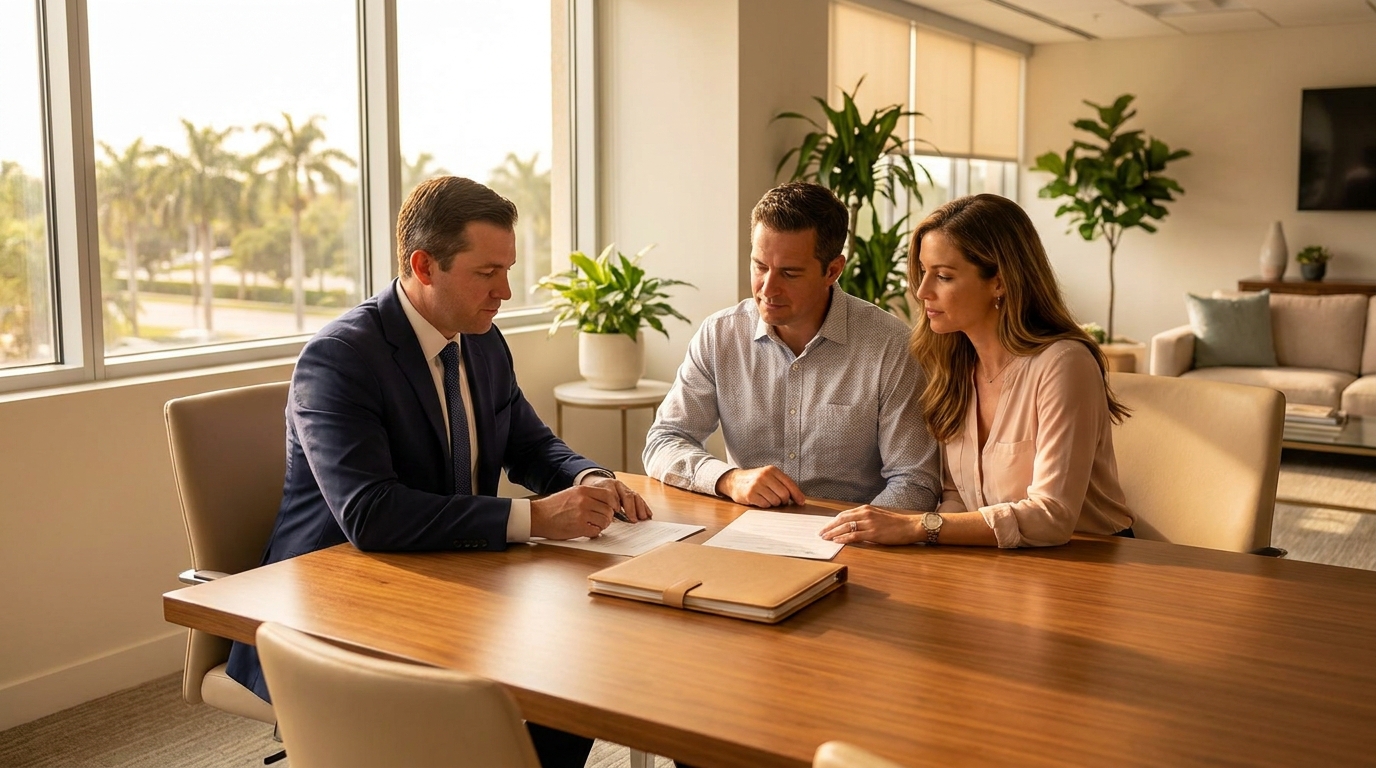
Within your first 90 days of moving, schedule a review with a Florida estate planning attorney. It’s an ideal time because you’re already updating addresses, accounts, insurance, and property ownership. A coordinated update prevents mismatches—like a new Florida deed that conflicts with an old will, or a beneficiary designation that no longer reflects your intentions.
What to bring to your planning meeting
- Copies of all prior estate planning documents (even if outdated)
- A list of assets (real estate, bank accounts, retirement, life insurance, business interests)
- Current statements for major accounts and policies
- Names and contact info for intended personal representative/trustee/agents
- Information about minor children, adult children, blended family concerns, or special needs planning

3) Florida homestead: protections, restrictions, and planning opportunities
Homestead is one of the most important—and misunderstood—features of Florida estate planning. If you own a primary residence in Florida, your home may qualify as homestead. This can provide strong protection from certain creditors and can also support property tax benefits (including the Save Our Homes cap). But homestead also comes with constitutional restrictions on how the home can pass at death.
If you have a surviving spouse, Florida law limits your ability to leave homestead to someone else. And if you have a minor child, the restrictions become even more significant. These rules can override a will or trust provision if the plan is not structured properly. New residents who purchase a Florida home and then rely on an old will—especially one written in a state without similar homestead restrictions—are at higher risk of unintended results.
Homestead planning also intersects with your deed. How your home is titled (for example, in one spouse’s name, jointly, or in a trust) can affect what happens at death and whether probate is required. Florida offers several ways to hold title that may reduce probate exposure, but each option has tradeoffs related to control, creditor protection, and tax considerations.
Finally, homestead can be a powerful planning tool in blended families. For example, a spouse may want to ensure the surviving spouse has housing security while also preserving an inheritance for children from a prior relationship. Florida law provides default protections for spouses, but those defaults may not match your goals. The right strategy could involve a properly drafted trust, a life estate arrangement, or other planning techniques designed for Florida’s legal landscape.
Real-world example: “I left the house to my kids” (but Florida said no)
A married couple moves to Florida and buys a home. One spouse’s older out-of-state will leaves “my house to my children.” If that spouse dies first, Florida homestead restrictions may prevent that devise if there is a surviving spouse. Instead of a clean transfer, the family may face a legal dispute, delays, and an outcome that differs from what the will says. Updating the plan after purchasing a Florida homestead can prevent this.
Actionable checklist for new Florida homeowners
- Confirm whether your property qualifies as Florida homestead
- Review the deed and how title is held (individual, joint, trust, etc.)
- Ensure your estate plan’s homestead provisions comply with Florida rules
- Coordinate homestead planning with your spouse and any minor children considerations
- Consider whether probate avoidance for the home is a goal and what method fits your situation
4) Wills, trusts, and probate in Florida: choosing the right structure
When you move to Florida, one of the most valuable exercises is re-evaluating whether your current plan’s structure still fits. Some families benefit from a Florida will-based plan; others prefer a revocable living trust to reduce probate involvement, provide privacy, and simplify administration if assets are spread across multiple accounts or states.
A Florida will can be perfectly appropriate if your assets are modest, your beneficiaries are straightforward, and you are comfortable with the probate process. Florida probate provides court oversight, which can be a benefit in some situations. However, probate can take time, and it becomes more complex if there are disputes, creditor issues, multiple heirs, or property in more than one state.
A revocable living trust is often attractive to new Florida residents who own real estate, expect a more complex administration, or value privacy. Trusts can reduce the need for court filings and may make it easier for a successor trustee to step in if you become incapacitated. Importantly, a trust only works if it is properly funded—meaning assets are titled in the name of the trust or directed to it via beneficiary designations.
Florida also offers streamlined probate procedures in some cases, such as summary administration, but eligibility depends on factors like the value of the probate estate and how long ago the person died. Relying on “we’ll just do the simple probate” is risky without understanding whether your estate will qualify. A well-designed plan anticipates your likely path and reduces uncertainty for your family.
Trust funding: the step most people miss
New residents sometimes sign a Florida trust but forget to retitle accounts or update deeds. The result is a trust that looks good on paper but doesn’t avoid probate. If you create a trust, build a funding plan: retitle bank and brokerage accounts, coordinate retirement accounts carefully (since many should not be retitled), and ensure your Florida real estate is addressed properly.
Practical comparison: will vs. trust for a new Florida resident
- Will-based plan: Usually lower upfront cost; probate likely required; public court filings; court supervision.
- Trust-based plan: More upfront planning and funding; can reduce or avoid probate for trust assets; more privacy; smoother incapacity transition.
Actionable tip: map your assets to your plan
Create a simple “asset map” with three columns: (1) asset/account, (2) how it is titled today, and (3) how it should transfer at death (beneficiary, joint ownership, trust, or probate). This exercise quickly reveals gaps—like a Florida condo titled individually with no clear transfer plan, or an old payable-on-death designation naming someone you no longer intend to benefit.
5) Incapacity planning in Florida: powers of attorney, healthcare directives, and HIPAA
Estate planning is not only about what happens after death. For many families, the most urgent risk is incapacity—an accident, illness, or cognitive decline that prevents you from managing finances or making medical decisions. Florida incapacity planning typically centers on a durable power of attorney, designation of healthcare surrogate, living will, and HIPAA authorization.
Florida powers of attorney are particularly important to update after moving. Even if an out-of-state power of attorney is technically recognized, institutions may hesitate to accept it, especially if it is older or missing key powers. Florida also has specific execution requirements and common expectations for what a modern power of attorney should include. If your agent needs to sell your Florida home, manage retirement distributions, deal with insurance, or handle digital accounts, the document must clearly authorize those actions.
Healthcare documents are equally critical. A designation of healthcare surrogate allows someone you trust to make medical decisions if you cannot. A living will expresses your wishes regarding life-prolonging procedures in specific circumstances. A HIPAA authorization helps your loved ones access medical information and communicate with providers. Without these documents, families may face delays, conflict, or even a guardianship proceeding to obtain decision-making authority.
In addition, consider how your plan handles practical realities: where your adult children live, who can respond quickly in an emergency, and whether your chosen agents can work together. New residents often move away from their prior support network. Updating decision-makers to reflect who is actually nearby—and who has the time and temperament for the role—can prevent future crises.
Real-world example: the out-of-state agent who can’t act fast enough
A retiree moves to Florida but leaves an adult child in another state as sole agent under a power of attorney and healthcare surrogate. When a sudden hospitalization occurs, the child struggles to travel quickly, and local family members cannot access information or make decisions. A better plan might name a primary agent who is local (or can respond quickly) and a backup agent who is out of state, with clear instructions and shared access to information.
Actionable tips for stronger incapacity planning
- Use Florida-specific documents that reflect current institutional requirements
- Name at least one backup agent/surrogate
- Discuss your wishes with your agents before an emergency occurs
- Provide your primary care physician and preferred hospital with copies of healthcare documents
- Keep a secure list of key accounts, contacts, and passwords (or use a reputable password manager with an emergency access plan)
6) Common pitfalls for new Florida residents (and how to avoid them)
Even well-prepared people make avoidable mistakes after relocating. One common pitfall is failing to coordinate beneficiary designations with the rest of the plan. Retirement accounts, life insurance, and many bank accounts transfer by contract, not by your will. If your beneficiaries still list an ex-spouse, a deceased relative, or an outdated trust, your assets may go to the wrong person or create administrative headaches.
Another frequent issue is owning property in multiple states. If you still own a home, land, or mineral rights outside Florida, your family could face probate in more than one state. A trust-based plan or other strategies may reduce the need for ancillary probate. New Florida residents often intend to sell their former home “soon,” but months or years pass; planning for the possibility that you still own out-of-state property at death is prudent.
Blended families present additional complexity. Florida law provides strong protections for spouses, including elective share rights, and homestead restrictions can override a plan that attempts to disinherit or limit a spouse’s interest in the home. If you and your spouse have children from prior relationships, you should be especially careful to structure inheritances in a way that is both legally enforceable and emotionally realistic.
Finally, many people neglect to update their plan after major life events that often coincide with moving: remarriage, divorce, new grandchildren, a business sale, or the purchase of a Florida home. Estate planning is not a one-time task. For new residents, the move itself is a major life event that should trigger a comprehensive review.
Practical “new resident” estate planning checklist
- Update your will and/or trust under Florida law
- Update durable power of attorney and healthcare documents to Florida forms
- Review Florida homestead implications and ensure your plan complies
- Update deeds and confirm how Florida real estate is titled
- Audit beneficiary designations on retirement, life insurance, and payable-on-death accounts
- Address out-of-state property to reduce the risk of multi-state probate
- Confirm guardianship nominations if you have minor children
- Create or update a “letter of instruction” for your family (contacts, accounts, preferences)
Example: beneficiary designations overriding the plan
A couple creates a Florida trust and will, intending to leave everything equally to their children. But the husband’s 401(k) still names “my sister” from years ago, and the life insurance names an ex-spouse. At death, those assets pass outside the trust and outside the will, potentially creating unfairness and conflict. A beneficiary audit is one of the highest-impact tasks you can complete after moving.
Conclusion: build a Florida-specific plan that matches your new life
Becoming a Florida resident is more than a change of address—it’s a shift into a legal system with its own estate planning rules, especially around homestead, probate, and incapacity documents. The good news is that with a focused review and a few strategic updates, you can turn a potentially confusing transition into a strong, Florida-aligned plan that protects your family and your legacy.
Key takeaways for new Florida residents include: (1) don’t assume out-of-state documents will work smoothly in Florida; (2) address Florida homestead early, especially if you are married or have minor children; (3) choose the right structure—will-based or trust-based—based on your assets and goals; (4) prioritize Florida-compliant incapacity planning; and (5) coordinate beneficiary designations and titling so your plan actually functions.
If you recently moved to Central Florida and want confidence that your estate plan matches Florida law and your current wishes, a Florida-focused review is a smart next step. With the right guidance, you can protect your loved ones, reduce administrative burdens, and enjoy your new home knowing the “what ifs” are handled.