Florida Homestead Inheritance Rules Explained
For many Florida families, the home is the single largest asset—and the one most emotionally tied to a loved one’s legacy. But Florida’s homestead laws don’t work like “everything goes through the will.” In fact, homestead inheritance rules can override a will, restrict who can receive the property, and change what heirs actually own. Understanding these rules before a crisis can prevent family conflict, avoid costly probate surprises, and help you plan a smooth transition for the people you care about.
Florida’s homestead protections are powerful. They can shield the primary residence from many creditors, provide property tax benefits, and place strict limits on how the property passes at death. These limits are designed to protect surviving spouses and minor children, but they can also create unintended outcomes—like giving adult children rights in the home when a surviving spouse expected to own it outright.
This guide breaks down Florida homestead inheritance rules in plain English, with practical examples and planning tips. If your family owns a home in Florida (especially in Lakeland, Polk County, or elsewhere in Central Florida), understanding homestead is one of the most important steps you can take in estate planning.
1) What Counts as Florida “Homestead” (and Why It Matters)
In Florida, “homestead” generally refers to a person’s primary residence—the place they actually live and intend to remain. Homestead status is not just a label; it triggers a set of constitutional protections and inheritance restrictions that can dramatically affect what happens when the owner dies. Many people assume homestead is only about the property tax exemption, but inheritance rules are often the bigger issue for families.
Homestead status typically applies to a home (including certain condos and mobile homes) located in Florida that the owner uses as their permanent residence. A vacation home, rental property, or second home usually does not qualify as homestead for inheritance purposes. That distinction matters because non-homestead real estate can often be gifted or devised more freely through a will or trust, while homestead has special limitations when a spouse or minor child survives.
Another common misconception is that homestead is “automatic” just because you own a Florida home. While you can often establish homestead by facts (residency and intent), the property appraiser’s homestead exemption is strong evidence. If the exemption is not in place, it does not necessarily mean the property is not homestead—but it can invite disputes among heirs, especially when multiple properties exist.
Homestead vs. Probate: Not the Same Thing
Homestead property can still be involved in probate, but it often passes to heirs by operation of law once the court determines it is homestead and identifies the heirs. In many estates, the personal representative must file a petition to determine homestead status. This step can be critical because it confirms that the property is protected from certain creditor claims and clarifies who receives it.
Practical tip: If your family is already dealing with an estate, ask early whether the residence is homestead and whether a “Determination of Homestead” will be needed. Clearing title sooner can prevent delays in refinancing, selling, or transferring the property.
Why Families Get Caught Off Guard
Families are often surprised because homestead inheritance rules can override a will. A parent might sign a will leaving the house to one child “because she took care of me,” but Florida law may still require the property to pass differently if the parent had a surviving spouse or minor child. That surprise can feel personal—even though it’s simply how Florida’s constitution is designed to protect certain family members.
Actionable advice: If your will or trust is “simple” and hasn’t been reviewed since a marriage, divorce, birth of a child, or relocation to Florida, it’s worth a homestead-specific review. Florida is unique, and plans drafted in other states often fail to account for Florida’s restrictions.
2) The Big Restriction: When a Spouse or Minor Child Survives
Florida’s most important homestead inheritance rule is the restriction on “devise” (leaving the property by will) when the owner dies leaving a surviving spouse or minor child. In many cases, you cannot freely choose who inherits the homestead if either of those protected family members is still living. This rule is meant to prevent a spouse or minor child from being disinherited from the family home.
If the deceased owner is survived by a spouse and also by descendants (children, grandchildren, etc.), the default result is often that the spouse receives a life estate in the homestead and the descendants receive the remainder interest. Florida law also provides an alternative: the spouse can elect to take a one-half interest as a tenant in common, with the descendants receiving the other half. Either way, the property may end up shared between spouse and children, which can complicate living arrangements and future sales.
If the deceased owner is survived by a spouse but no descendants, the spouse generally receives the homestead outright (in fee simple). This is closer to what many families expect. But when there are children from a current or prior relationship, the outcome can shift quickly into shared ownership.
Example: Second Marriage, Adult Children, and an Unintended Co-Ownership
Consider a common Central Florida scenario: a husband remarries later in life and owns a Lakeland home in his name alone. He has two adult children from a previous marriage. He signs a will leaving the home to his new spouse “so she can stay there.” He passes away. Under Florida homestead rules, the spouse may receive a life estate (or elect a one-half tenant-in-common share), and the two adult children receive the remainder (or the other half). The spouse may be able to live there, but selling or refinancing can become complicated because the children have real ownership rights.
Practical tip: If a blended family is involved, do not rely on a simple will. Homestead planning often requires coordinated strategies—like a properly structured trust plan, a marital agreement, or careful titling and non-homestead asset allocation—to meet everyone’s needs.
Minor Children Change Everything
If the owner is survived by a minor child, the homestead generally cannot be devised to anyone other than the protected heirs. In other words, you typically cannot leave the homestead to a friend, a charity, a sibling, or even to an adult child “instead of” a minor child. The law is particularly strict here because it is designed to protect a child’s housing stability and inheritance rights.
Real-world issue: Families sometimes try to “solve” this by adding someone to the deed or using a quick claim deed late in life. That can create serious legal and tax problems, expose the property to the new owner’s creditors, and may not achieve the intended result. It’s far safer to plan with an attorney before making changes to title.
3) Who Inherits the Homestead and What They Actually Receive
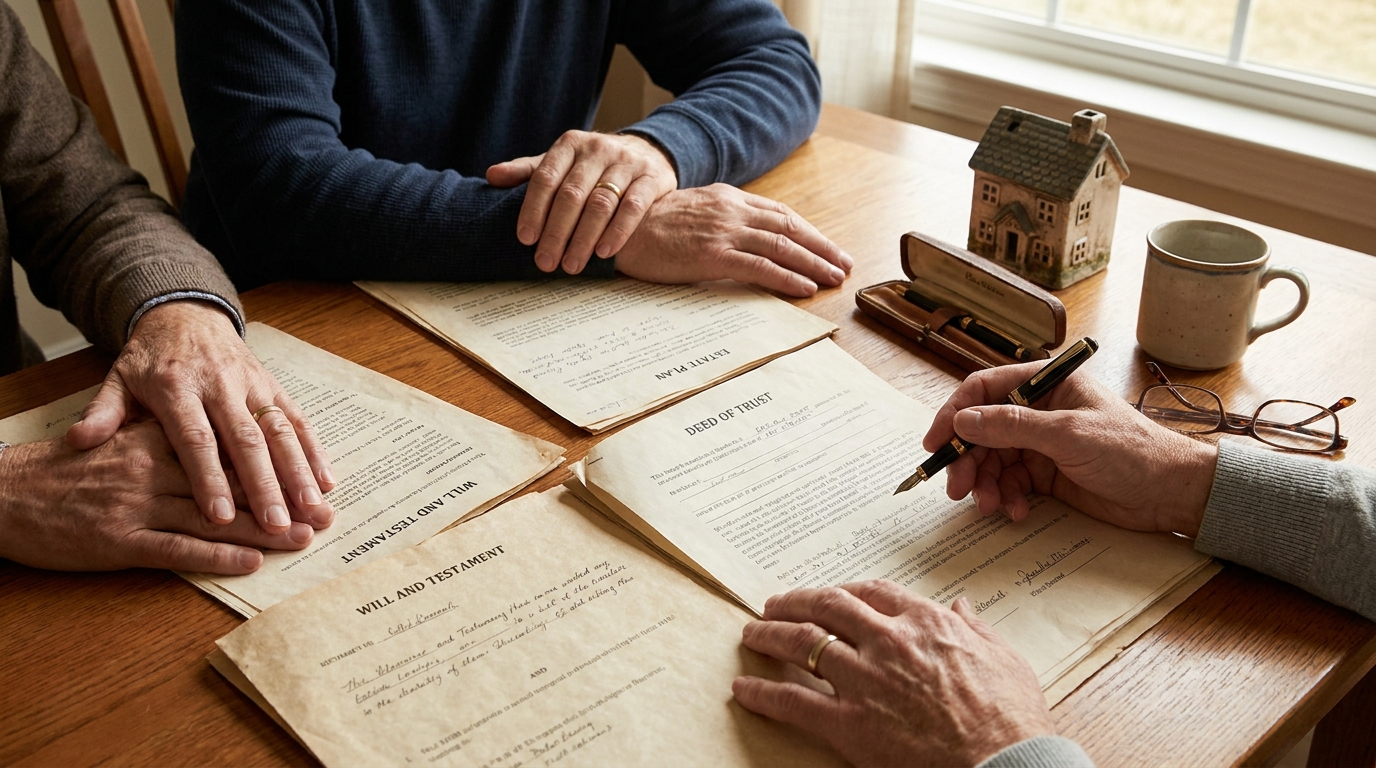
Homestead inheritance is not just about who gets the property—it’s also about what form of ownership they receive. Florida homestead can pass as fee simple ownership, a life estate with remainder, or as tenants in common depending on the family structure. Each of those outcomes affects control, responsibility for expenses, and the ability to sell or mortgage the home.
When a surviving spouse receives a life estate, the spouse generally has the right to use and occupy the home for life. The children (or other descendants) hold the remainder interest, meaning they become full owners only after the spouse’s death. This arrangement can work well in stable families, but it can also create tension if the spouse wants to sell and move, or if the home needs major repairs and the parties disagree about who should pay.
When the spouse elects the one-half tenant-in-common option, the spouse and descendants become co-owners immediately. Co-ownership can be simpler in some cases (because it avoids the “life estate vs. remainder” complexity), but it still requires cooperation. Any co-owner can generally seek partition (a court-ordered sale) if the parties cannot agree, which can escalate family conflict.
Descendants and “Per Stirpes” Concepts
When we say “descendants,” we mean children, grandchildren, and further lineal heirs. If a child has already passed away but left children (the deceased owner’s grandchildren), those grandchildren may step into that child’s place. This can create unexpected fractional ownership interests, especially in larger families, and it can make title work more complex when the property is eventually sold.
Practical tip: If your family has multiple generations, consider whether the home is likely to be kept or sold after death. If the intent is to sell and distribute proceeds, planning can focus on making that sale easier—by clarifying authority, reducing the number of decision-makers, and ensuring the estate has liquidity for expenses.
What If There Is No Spouse and No Minor Child?
If there is no surviving spouse and no minor child, the owner generally has much more freedom to leave the homestead to whomever they choose. In that situation, a properly drafted will (or trust plan) can control who receives the property. However, even when devise restrictions do not apply, other issues still matter—such as whether the property is titled correctly, whether probate is required to clear title, and whether there are creditor concerns.
Actionable advice: Even if you believe you have “no restrictions,” confirm your plan in writing. Families often assume a child will “just take over the house,” but without a clear estate plan, the property may pass under intestacy rules and require a formal probate administration.
4) Common Pitfalls: Wills, Deeds, Trusts, and “Quick Fix” Transfers
Homestead problems often start with good intentions and bad execution. A will drafted years ago, a do-it-yourself deed, or a “just add my kid to the title” approach can trigger unintended results. Florida homestead is an area where small paperwork decisions can create big legal consequences.
One of the biggest pitfalls is assuming a will controls the homestead. As discussed, Florida’s constitution may restrict devise when there is a surviving spouse or minor child. That means your will can be perfectly valid and still be ineffective as to the homestead. This is why estate plans should be reviewed through a Florida-specific lens, especially after moving to the state.
Another common pitfall is using a quitclaim deed to add a child or partner to the title. While this may avoid probate in some cases, it can also expose the home to the new co-owner’s creditors, create gift tax issues, and complicate capital gains treatment. It can also create family disputes if other children feel the transfer was unfair or the result of undue influence.
Revocable Trusts and Homestead: Helpful, but Not a Magic Wand
Revocable living trusts can be excellent tools in Florida estate planning, but they do not automatically override homestead devise restrictions. If the home is homestead and the owner is survived by a spouse or minor child, the trust’s distribution terms may still be limited by Florida law. In other words, putting the home in a trust does not necessarily allow you to leave it to anyone you want.
That said, trusts can still be very useful for administration. A trust may help avoid probate for non-homestead assets, streamline management, and provide structure for how expenses are paid or how a sale is handled. The key is drafting the trust and related documents to work with homestead rules—not against them.
Lady Bird Deeds (Enhanced Life Estate Deeds)
Florida recognizes enhanced life estate deeds (commonly called “Lady Bird deeds”) in many contexts. They can be a powerful tool to transfer property at death while retaining control during life. However, they must be drafted carefully, and they do not eliminate homestead devise restrictions. If the deed attempts to transfer the homestead in a way Florida law prohibits (for example, cutting out a protected spouse or minor child), it can create litigation risk and title problems.
Practical tip: If someone suggests a Lady Bird deed as a universal solution, treat that as a red flag. It can be a great tool in the right situation, but it should be chosen as part of a broader plan that considers family structure, creditor protection, taxes, Medicaid planning goals, and long-term housing needs.
Real Example: “We’ll Just Sell It Later” Can Become a Stalemate
Families sometimes accept co-ownership thinking, “We’ll sell the home later and split the money.” But if one heir is living in the home, another wants to sell immediately, and a third can’t be reached, the plan can stall. Meanwhile, property taxes, insurance, HOA fees, and maintenance continue. In Florida, disagreements can lead to partition actions—lawsuits that can consume time and money and strain relationships.
Actionable advice: If co-ownership is likely, put an agreement in place early. A simple written plan can address who pays expenses, how decisions are made, whether a buyout is permitted, and what happens if someone refuses to cooperate.
5) Probate, Creditors, and Taxes: How Homestead Impacts the Bigger Estate
Even when the homestead passes to heirs, the estate may still need probate to handle other assets, pay valid debts, and clear title. Homestead can be protected from many creditor claims, but “protected” does not mean “invisible.” The court often needs to confirm homestead status, and the personal representative must still follow proper procedures.
From a creditor perspective, one of the most valuable benefits of Florida homestead is that it is generally exempt from forced sale by many creditors (with important exceptions). Certain creditors—like mortgage lenders, property tax authorities, and mechanics lienholders—may still have enforceable claims. If there is a mortgage, heirs should understand that the lender’s rights remain; the home does not become “free and clear” simply because it is homestead.
For taxes, most families are concerned about property taxes and income taxes rather than federal estate tax. Florida has no state estate tax, and most estates will not owe federal estate tax due to the high exemption amount (which can change with federal law). However, capital gains and property tax reassessment issues can matter when heirs later sell or transfer the home.
Property Taxes and the Homestead Exemption
The Florida homestead exemption can reduce assessed value and cap annual increases under the Save Our Homes rules. After the owner’s death, surviving spouses may be able to maintain certain benefits, and in some cases, the homestead exemption can continue for heirs who occupy the home as their permanent residence. But if the home becomes a rental or sits vacant, exemptions may be lost and taxes may increase.
Practical tip: After a death, families should promptly review the property appraiser’s requirements. Deadlines and documentation matter. Failing to update ownership and exemption status can create tax surprises later.
Capital Gains and “Step-Up” in Basis
When someone inherits real estate, the tax basis is often “stepped up” to the property’s fair market value at the date of death. This can significantly reduce capital gains if the heirs sell soon after inheriting. But if the home was transferred during life (for example, by adding a child to the deed), the tax result can be very different—sometimes leading to larger capital gains taxes later.
Actionable advice: Before making lifetime transfers of a homestead, ask both legal and tax questions. Avoiding probate is not the only goal; the best plan balances probate efficiency with creditor protection, family harmony, and tax outcomes.
Title Issues: Why You May Need Court Orders Even When Everyone Agrees
Even in cooperative families, a title company may require a court order determining homestead and heirs before it will insure title for a sale or refinance. This is especially common when the property was solely in the decedent’s name. Without clear documentation, buyers and lenders may worry that a protected spouse or child could later claim an interest.
Practical tip: If you anticipate selling the home after a loved one’s death, talk to an attorney early. Clearing title issues at the beginning of the administration is often faster and less expensive than trying to fix them during a closing.
6) Planning Strategies to Protect Your Family and Avoid Conflict
Homestead planning is not one-size-fits-all. The “right” strategy depends on whether you are married, whether you have minor children, whether you have children from prior relationships, and whether the goal is for a spouse to stay in the home, for the home to be sold, or for the property to remain in the family long-term.
For married couples with children, one of the most important conversations is whether the surviving spouse should own the home outright or whether children should receive an immediate or future interest. Florida’s default rules may create shared ownership, which can be fine—or can be a recipe for conflict. Planning can sometimes provide more flexibility by using non-homestead assets to “equalize” inheritances, or by creating agreements and structures that reduce friction.
For blended families, the stakes are even higher. A surviving spouse may need housing security, while adult children may want to protect their inheritance. Without careful planning, both sides can feel vulnerable. A well-designed estate plan can address these concerns directly, rather than leaving everyone to navigate life estates, elections, and co-ownership disputes after a death.
Practical Steps Every Florida Homeowner Should Take
- Confirm homestead status: Verify the homestead exemption with the county property appraiser and ensure your primary residence is correctly identified.
- Review your deed: Check how the property is titled (sole ownership, joint tenancy, tenancy by the entirety). Title affects what happens at death.
- Update your estate plan after life changes: Marriage, divorce, relocation to Florida, and births/adoptions are all triggers for review.
- Plan for liquidity: Ensure there are funds to cover mortgage payments, insurance, taxes, and repairs during administration.
- Document your intent: If your plan involves co-ownership, consider a written agreement about expenses, occupancy, and sale/buyout terms.
When a Spouse Wants to Stay, but Children Need Protection
A common goal is: “My spouse should be able to live in the home, but ultimately the house should go to my children.” Florida’s default life estate structure may align with that goal, but it can also be rigid. Families may prefer a plan that allows the spouse to sell and downsize, or that sets rules for maintenance and expenses. In some cases, a trust-based approach (paired with compliant homestead planning) can provide more guidance and reduce ambiguity.
Real example: A surviving spouse may want to move closer to family or to assisted living. If children hold a remainder interest and disagree about selling, the spouse may feel trapped. Planning can address this by setting expectations in advance and providing a clear process for sale and distribution.
What to Do After a Loved One Dies: A Quick Checklist
If you are handling an estate now, focus on stabilizing the situation and preventing avoidable mistakes:
- Do not rush to transfer the deed without legal advice—especially if there is a surviving spouse or minor child.
- Secure the property and confirm insurance coverage is in place; vacant homes can create coverage issues.
- Gather documents (deed, mortgage statement, property tax bill, will/trust, marriage/divorce records).
- Identify all potential heirs early; missing heirs can delay administration and sales.
- Consult an attorney about whether a probate administration and a determination of homestead are needed.
Actionable advice: If family members are already disagreeing, get guidance immediately. Early legal structure often prevents escalation. Waiting until a closing falls apart or a lawsuit is filed is almost always more expensive.
Conclusion: Key Takeaways for Florida Families
Florida homestead inheritance rules are designed to protect families—but they can also produce outcomes families don’t expect. The biggest surprises usually come from the restriction on leaving the homestead by will when a surviving spouse or minor child exists, and from the form of ownership heirs receive (life estate, remainder interests, or tenants in common). Those rules can create shared ownership between a spouse and children, complicate sales, and fuel conflict if no one planned ahead.
The most effective way to protect your family is to treat homestead as a central part of your estate plan, not an afterthought. Confirm your homestead status, understand how your deed is titled, and make sure your will or trust is designed for Florida—especially if you have a blended family, adult children, or any minor children. Avoid “quick fix” deed transfers that can create creditor exposure and tax issues.
If you want your loved ones to avoid uncertainty, delays, and disputes, the best time to address homestead planning is now—while you can still make thoughtful choices. With the right strategy, you can preserve the home’s protections, honor your intentions, and make the transition easier for the people who matter most.