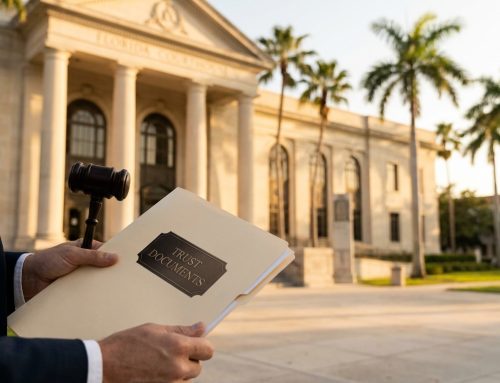
Estate Planning for Unmarried Couples in Florida
More Florida couples are building lives together without getting married—buying homes, raising children, sharing bank accounts, and caring for each other through illness. But when a crisis hits, many are surprised to learn that love and long-term commitment do not automatically translate into legal rights. In Florida, marriage triggers a web of default protections in inheritance, medical decision-making, and property rights. Unmarried partners generally do not receive those protections unless they create them intentionally through estate planning.
This guide explains how estate planning works for unmarried couples in Florida, what can go wrong without a plan, and the practical steps you can take to protect each other. Whether you are newly cohabitating or have spent decades together, the goal is the same: make sure the person you choose is empowered to act for you, supported financially, and protected from avoidable conflict.
1) Why unmarried couples need a different estate plan in Florida
Florida’s laws are built around family relationships recognized by statute—spouses, children, and sometimes other blood relatives. If you pass away without a valid estate plan (called dying “intestate”), Florida’s intestacy rules determine who inherits. For an unmarried person, the surviving partner is typically not on the list. That means assets may go to children, parents, siblings, or more distant relatives—even if you shared a home and finances with your partner for years.
The same problem appears in medical and end-of-life situations. Hospitals and providers often look first to a legal spouse or next of kin for decision-making authority. Without proper documents, your partner may be left out of critical conversations or unable to authorize treatment, access information, or make decisions if you are incapacitated.
Florida also does not recognize common-law marriage for relationships formed in Florida (with limited exceptions for valid common-law marriages created in other states). Many couples assume that living together “long enough” creates spousal rights. In Florida, it generally does not. Without deliberate planning, your partner may face barriers to inheriting your assets, staying in the home, or even handling your funeral arrangements.
Real example: A Lakeland couple buys a home together, but the deed is titled only in one partner’s name because that partner qualified for the mortgage. When the owner dies unexpectedly without a will, the home may pass to the owner’s adult child or parent under intestacy—leaving the surviving partner scrambling, even if they paid half the mortgage for years.
Practical tip: Start by listing “default assumptions”
Many estate plans fail because couples assume the law will “do the right thing.” Make a quick list of what you want to happen if you die or become incapacitated—who inherits, who makes medical decisions, who handles finances, who stays in the home, and who cares for pets or children. Then compare that list to Florida’s default rules. The gap between the two is what your plan must fix.
2) Core documents every unmarried couple should consider
An effective plan usually includes both “after death” documents (like a will or trust) and “during life” documents (like powers of attorney and health care directives). For unmarried couples, the “during life” documents are often just as important as the inheritance plan because they establish authority when you are alive but unable to act.
Last Will and Testament. A will lets you name who inherits probate assets, appoint a personal representative (executor), and nominate guardians for minor children. For unmarried couples, a will is frequently the simplest way to ensure your partner receives specific assets. However, a will alone may not avoid probate, and it does not control certain assets that pass by beneficiary designation or by operation of law.
Revocable Living Trust. A trust can provide more control, privacy, and continuity—especially if you own real estate, have blended family concerns, or want to streamline administration. You can name your partner as trustee or successor trustee and spell out exactly how assets are used during your lifetime and distributed at death. A trust can also reduce the likelihood of disputes by clarifying intent and creating a clear management structure.
Durable Power of Attorney (DPOA). This document authorizes your chosen agent (often your partner) to handle financial and legal matters if you cannot. Without it, your partner may have to seek a court-appointed guardianship to pay bills, manage accounts, or handle property—an expensive and time-consuming process. Florida law has specific requirements for powers of attorney, and “springing” powers (that activate only upon incapacity) are generally not permitted for documents executed after 2011, making careful drafting essential.
Health Care Surrogate Designation and Living Will. A designation of health care surrogate authorizes your partner to make medical decisions and access information. A living will communicates your wishes about life-prolonging procedures. Together, these documents help ensure your partner can advocate for you and that your values guide medical care, even if other relatives disagree.
HIPAA Authorization. Even when someone is close to you, privacy rules can limit what medical providers will share. A HIPAA release helps your partner receive information and communicate with providers. It is often a simple document, but it can make a major difference during emergencies.
Practical tip: Coordinate your documents with your real life
Estate planning is not a stack of forms—it is a coordinated system. If your will leaves everything to your partner but your retirement account names a parent as beneficiary from years ago, the beneficiary designation usually controls. The most protective plans align the will/trust, beneficiary designations, property titling, and powers of attorney so they all point in the same direction.

3) Getting property and beneficiary designations right
For unmarried couples, how assets are titled and who is listed as beneficiary often determines what happens—sometimes more than the will. Florida has special spousal protections (like elective share and homestead rules) that do not apply the same way to unmarried partners, which can be both an opportunity and a risk. The key is to structure ownership intentionally and document each partner’s contributions and expectations.
Bank and brokerage accounts. Many accounts can be titled with “payable on death” (POD) or “transfer on death” (TOD) designations, allowing assets to pass directly to your partner outside probate. This can be a straightforward way to provide immediate liquidity for funeral costs, mortgage payments, and living expenses. However, POD/TOD designations should be reviewed carefully if you also have minor children or want to control how and when assets are used.
Retirement accounts and life insurance. IRAs, 401(k)s, and life insurance policies pass by beneficiary designation. Make sure these are updated. Also note that non-spouse beneficiaries often have different distribution rules than spouses, which can affect taxes and long-term planning. While this post is not tax advice, it is important to understand that naming a partner as beneficiary may lead to different planning considerations than naming a spouse.
Real estate titling. Couples frequently buy a home together, but the deed matters. Common options include tenants in common (each partner owns a defined share that can be left by will) or joint tenancy with right of survivorship (the survivor automatically becomes the owner). Each approach has pros and cons. Joint ownership with survivorship can avoid probate for that asset, but it may not reflect unequal contributions or desired distributions if the relationship changes.
Homestead considerations. Florida homestead laws are protective but complex. Unmarried partners do not receive the same automatic homestead rights a spouse might have. If one partner owns the home individually, the surviving partner could face uncertainty without a clear plan (and sometimes without a clear legal right to remain). A well-structured estate plan can address occupancy, expenses, and what happens if the surviving partner later moves or remarries.
Practical tip: Use a “three-bucket” review
To avoid surprises, categorize assets into: (1) assets that pass by beneficiary designation (retirement, life insurance, POD/TOD accounts), (2) assets that pass by title/operation of law (joint ownership with survivorship), and (3) assets that pass through your will or trust. Your plan should address all three buckets, not just the will.
4) Planning for incapacity: medical decisions, finances, and caregiving
Incapacity planning is often where unmarried couples feel the legal gap most acutely. If you are unconscious after an accident or unable to manage your affairs due to illness, someone must step in. Without documents, the people with default authority may be relatives you are estranged from—or relatives who do not understand your relationship or wishes.
Medical decision-making. A designation of health care surrogate gives your partner legal authority to consent to treatment, choose providers, and access records. In real life, this can determine whether your partner is allowed to participate in care planning meetings or make time-sensitive decisions. It also reduces the risk of conflict with family members who may have different views about treatment.
Financial management and bill-paying. A durable power of attorney can allow your partner to pay the mortgage, keep utilities on, manage insurance claims, and handle banking. Without it, your partner might not be able to access accounts—even if you intended to share finances. Court guardianship is a last resort that can be costly, public, and stressful.
Long-term care planning. If you need assisted living, in-home care, or nursing home care, decisions must be made about where you live, how care is paid for, and who coordinates services. Elder law planning may involve Medicaid planning strategies, but even aside from Medicaid, unmarried couples should plan for practical caregiving realities: who can speak with providers, who can sign admission paperwork, and how expenses are allocated.
Advance directives reduce crisis decision-making. A living will and related directives help avoid ambiguity. They also relieve your partner from having to guess what you would have wanted. For many couples, the peace of mind from clear directives is one of the most valuable outcomes of planning.
Practical tip: Add “backup decision-makers”
Even if your partner is your first choice, name at least one alternate agent for medical and financial roles. If your partner is traveling, ill, or otherwise unavailable, having a backup prevents delays and avoids the need for court intervention.
5) Special issues: children, blended families, and “his/hers/ours” assets
Unmarried couples often have children from prior relationships, children together, or both. These family structures can create competing expectations—especially when extended family members become involved after a death. Thoughtful planning can protect your partner while also ensuring children are cared for and treated fairly.
Guardianship nominations for minor children. If you are a legal parent, your will can nominate a guardian if the other parent is not available or is unfit. While the court makes the final decision, a nomination carries significant weight. If your partner is not a legal parent, additional planning may be needed—such as co-parenting agreements, adoption considerations (where appropriate), or at minimum clear documentation of your wishes.
Providing for a partner without disinheriting children. Many people want their partner to be financially secure but also want remaining assets to go to their children. Trust planning can help—such as allowing your partner to live in the home for a period of time or receive income, with the remainder going to children. This can be particularly helpful when the home is the main asset and selling it immediately would disrupt the surviving partner’s life.
Blended family conflict is common—and predictable. Disputes often arise when relatives believe the surviving partner is “taking everything,” or when the surviving partner fears being forced out. A clear plan reduces room for interpretation. It also creates a paper trail of intent, which can be crucial if someone later challenges the plan.
Document contributions and expectations. If one partner contributes significantly to a home titled in the other partner’s name, or if you commingle finances, consider documenting the arrangement. This could involve a cohabitation agreement, a property agreement, or careful trust planning. The goal is to reduce ambiguity about whether contributions were gifts, rent, shared expenses, or investments.
Real example: balancing a partner and adult children
One partner owns a home prior to the relationship and has two adult children. They want their partner to remain in the home if they die first, but ultimately want the home to pass to the children. A trust can grant the surviving partner the right to live in the home (and spell out who pays taxes, insurance, and repairs), while preserving the remainder for the children. Without this structure, the children could inherit immediately and decide to sell—creating conflict and potential displacement.
6) Avoiding disputes and keeping your plan up to date
Even well-intentioned couples can run into problems if documents are outdated, inconsistent, or incomplete. For unmarried couples, the risk of disputes can be higher because relatives may feel they have a stronger claim than a partner who is not legally recognized as a spouse. The best defense is clarity, consistency, and regular maintenance.
Choose the right fiduciaries. Your personal representative (executor) and trustee (if you use a trust) will have significant power. Many couples name each other first, but also name a neutral backup—such as a trusted professional or responsible family member—especially if there is a risk of conflict with children or other relatives.
Reduce ambiguity with specific gifts and instructions. If you want your partner to receive the home, say so clearly. If you want them to have the right to live there but not own it, spell out the terms. If you want personal items distributed in a certain way, consider a personal property memorandum (where permitted) or detailed instructions. Vague language invites arguments.
Plan for “what if we break up?” It is uncomfortable, but essential. Marriage has a legal divorce process; unmarried couples do not have the same default framework for unwinding finances. If your estate plan names your partner everywhere and the relationship ends, failing to update your plan can produce an outcome you no longer want. Build a habit of reviewing your plan after major life changes: separation, reconciliation, a new home purchase, a new child, a serious diagnosis, or a significant change in assets.
Keep documents accessible. In an emergency, the best documents are the ones that can be found. Tell trusted people where originals are stored, provide copies to your agents, and keep a list of key contacts (attorney, financial advisor, insurance agent). If your partner is your decision-maker, they should not have to guess where your paperwork is.
Practical tip: Schedule an annual “estate plan checkup”
Set a recurring calendar reminder once a year to review: beneficiaries, account titles, the deed, powers of attorney, health care documents, and your list of assets and debts. Many issues are simple to fix if caught early, but expensive to litigate if discovered after a death.
Conclusion: key takeaways for unmarried couples in Florida
For unmarried couples in Florida, estate planning is not just a financial exercise—it is how you create the legal protections that marriage would otherwise provide automatically. Without a plan, your partner may have no inheritance rights, no authority to make medical decisions, and no clear ability to manage finances during incapacity. With a well-designed plan, you can protect each other, reduce family conflict, and ensure your wishes are honored.
Key takeaways:
- Do not rely on intestacy laws. In Florida, an unmarried partner generally does not inherit without a will, trust, or beneficiary designation.
- Prioritize incapacity planning. Durable powers of attorney, health care surrogate designations, living wills, and HIPAA authorizations are critical.
- Coordinate titles and beneficiaries. Many assets pass outside the will—review POD/TOD designations, retirement accounts, life insurance, and real estate deeds.
- Address children and blended family realities. Trust planning can balance support for a partner with long-term goals for children.
- Update regularly. Review your plan after major life changes and at least annually.
If you and your partner have built a life together, your plan should reflect it—clearly, legally, and proactively. Working with an experienced Florida estate planning attorney can help you choose the right tools, avoid unintended consequences, and create a plan that truly protects the people who matter most.